
The Growing Importance of Water Resilience in the UK
Water is one of the most critical resources for businesses, utilities, and communities across the UK. From critical national infrastructure (CNI), data centres, and manufacturing and engineering plants to utilities, uninterrupted access to clean, safe water is essential for operations, safety, and compliance.
However, changing weather patterns, ageing infrastructure, and unexpected incidents are putting pressure on water supplies, highlighting the growing importance of water resilience for UK businesses and organisations.
What Is Water Resilience?
Water resilience refers to the ability of a business or community to mitigate the impact of a failure or interruption to its usual water supply and ensure continued access to safe, clean water so that operations can continue.
This includes preparing for and responding to disruptions such as:
- Burst mains or pipeline failures
- Planned works or infrastructure upgrades
- Contamination incidents
- Extreme weather events, including droughts or flooding
A resilient water strategy ensures that operations continue smoothly, staff and customers stay safe, and compliance requirements are met.
Why Water Resilience Matters in the UK
The Importance of Water Resilience has increased significantly in recent years. Although the UK has historically enjoyed a dependable water network, several challenges are increasing the risk of interruptions:
1. Ageing Infrastructure
Much of the UK’s water system is decades old. When pipes, valves, or treatment assets fail, outages can be widespread and prolonged.
2. More Extreme Weather
The UK is experiencing more heatwaves, heavy rainfall, flash floods, and occasional drought. These events can restrict water availability or impact water quality.
3. Urban Growth
Higher population density and new developments increase demand on local networks, sometimes beyond existing capacity.
4. Stricter Regulations
Organisations operating in critical national infrastructure (CNI), data centres, manufacturing, and engineering environments must meet strict water quality and supply standards. Even a short interruption can lead to non-compliance, operational disruption, or wider service impacts.
5. Operational Risk
For critical industries, losing water even temporarily can force shutdowns, delay projects, or halt essential services.
Without planning, a sudden disruption can result in reputational damage, financial loss, and operational downtime. This is why UK organisations are prioritising reliable backup solutions and contingency planning.
How Businesses Can Improve Water Resilience
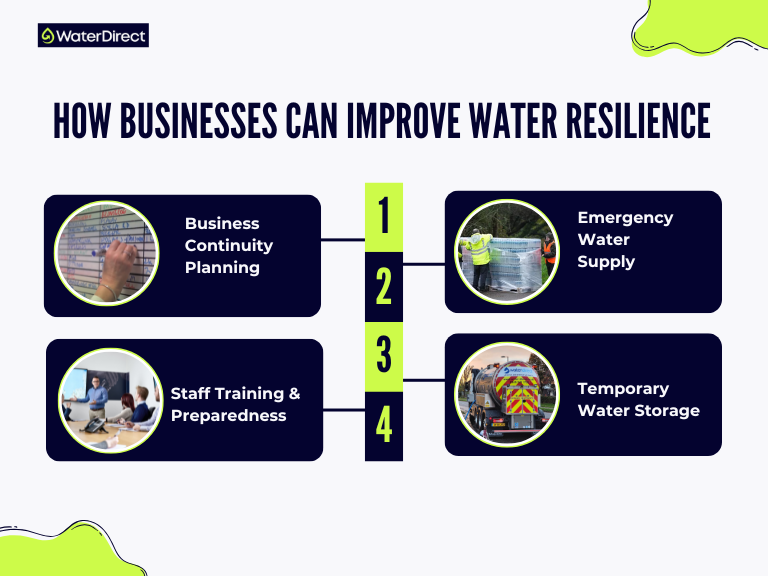
A strong water resilience strategy combines proactive planning, engineered solutions, and reliable alternative water provision to ensure organisations can maintain operations during any supply interruption. Below are key approaches businesses across the UK can use.
1. Business Continuity Planning
Services like Water Direct’s WaterTight programme provide detailed site audits and risk assessments, including water usage profiling to understand how long operations can continue during a supply interruption. The process identifies water criticality across sites, systems, and processes, assesses required volumes and delivers engineering-led recommendations to improve resilience, such as network enhancements and increased on-site water storage. Guaranteed response times of 4–24 hours ensure support is in place when an interruption occurs.
2. Emergency Water Supply
Rapid access to potable water via a trusted emergency water supplier through tankers or bulk bottled water is a vital part of a resilience plan. By integrating emergency supply with WaterTight, organisations can react immediately to supply interruptions, maintaining critical operations while planned mitigation measures take effect.
3. Temporary Water Storage
Static tanks and bowsers provide a buffer of potable water for critical operations, supporting continuity in CNI, data centres, manufacturing, and engineering environments.
4. Staff Training and Preparedness
A resilience plan is only effective if employees know how to use it. Staff training ensures teams can implement emergency procedures quickly, operate storage systems safely, and support operational continuity during any disruption.
By combining WaterTight continuity planning, emergency water provision, temporary on-site storage, and staff readiness, businesses gain a fully integrated water resilience plan. This approach anticipates risks, provides immediate response capabilities, and strengthens ongoing operational continuity, ensuring that critical operations are maintained no matter the challenge.
The Benefits of Strong Water Resilience
- Operational continuity: Avoid costly downtime in critical industries.
- Regulatory compliance: Meet health and safety standards without disruption.
- Staff and customer safety: Ensure access to safe, potable water at all times.
- Reputation protection: Demonstrate reliability and preparedness to stakeholders.
- Flexibility: Quickly adapt to both planned and unplanned water supply challenges.
Conclusion
In the UK, water resilience is no longer optional, it is essential for businesses and organisations that rely on consistent water access. A robust water resilience plan brings together contingency planning, emergency water provision, and temporary on-site storage as connected components. Collectively, these measures help organisations put preventative controls in place, strengthen a site’s ability to withstand the impact of an interruption to the usual mains supply, and ensure they can respond effectively when a disruption occurs.
Working with a reliable alternative water supplier means your business has a tailored resilience plan, site-specific assessments, and engineered recommendations, supported by emergency water provision and temporary storage to maintain operations through any disruption.
FAQs
Who needs water resilience planning?
Any organisation that depends on clean water to maintain critical operations should have a resilience plan. This includes critical national infrastructure (CNI), data centres, manufacturing and engineering plants and utilities.
Can temporary water storage help during planned works?
Yes. Temporary storage, such as static tanks, bowsers, or Aqubes, can hold a reliable buffer of potable water, keeping operations running safely during maintenance or infrastructure upgrades.
Why should businesses work with a specialist alternative water supplier?
A specialist provides site-specific assessments, water usage profiling, and tailored resilience plans, supported by engineering recommendations and compliant emergency supply. This ensures organisations can prepare, respond, and maintain critical operations during any water supply interruption.
Share:
Related
Risk map your water resilience
19 Feb 26


From Risk Assessment to Action
13 Feb 26